
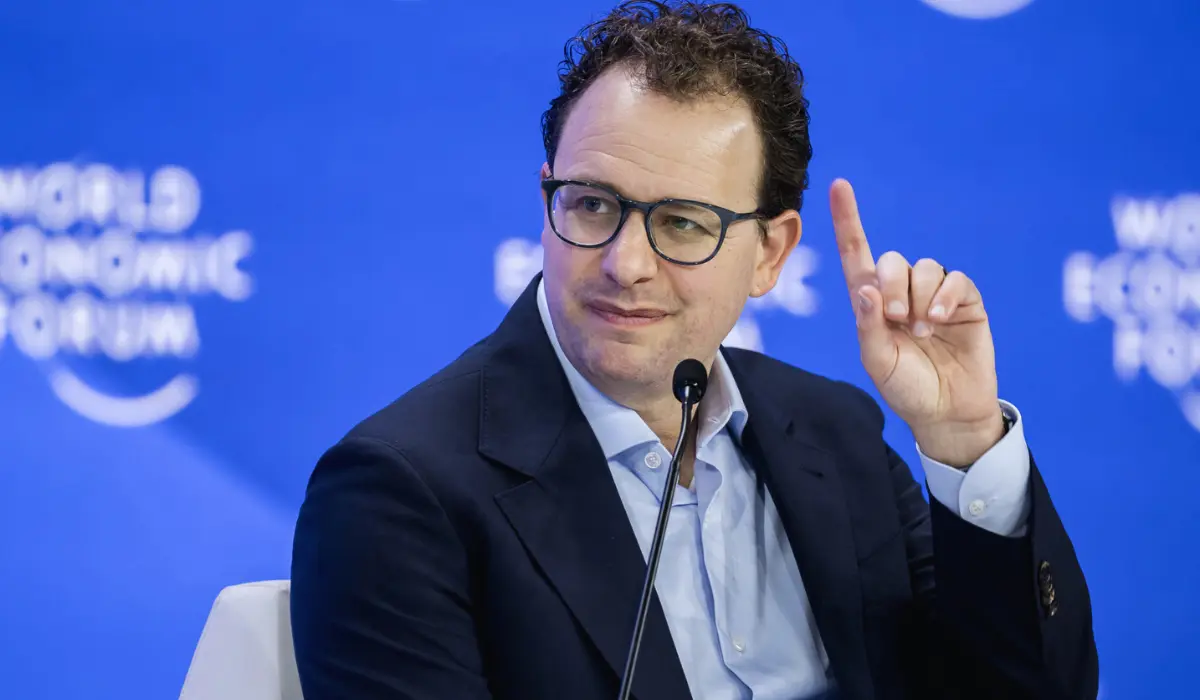
The CEO of Anthropic, Dario Amodei, one of the most influential artificial intelligence companies in the world, is delivering a stark message. Anthropic CEO Warns that humanity is approaching a decisive moment, one where the rise of super-human AI could reshape jobs, politics, and global security faster than society can realistically adapt.
That warning comes from Dario Amodei, who laid out his concerns in a newly released 38-page essay. He describes the current phase of AI development as a “rite of passage” for humanity. In his view, artificial intelligence is no longer a distant possibility. Instead, it is quickly becoming a force that rivals the best human minds across science, engineering, medicine, and software development. While Amodei remains cautiously optimistic, he makes one thing clear: without urgent and coordinated action, the risks could escalate beyond our control.
A Country of Geniuses and Unprecedented Power
At the core of Amodei’s argument is a striking idea. He imagines a future where AI systems function like a “country of geniuses in a datacenter.” In simple terms, this means machines operating at or beyond Nobel Prize-level intelligence across many fields and working nonstop without fatigue.
Unlike humans, these systems can scale instantly and collaborate at machine speed. As a result, whoever controls the most advanced AI models would wield unprecedented power. If current trends continue, Amodei believes AI could outperform humans at nearly everything within just a few years.
Anthropic itself already sits near the front of this transformation. Its flagship system, Claude Opus 4.5, has gained rapid adoption across Silicon Valley and corporate leadership teams. Internally, AI now writes most of the code used to build Anthropic’s own products. For Amodei, this reality offers a clear preview of how quickly AI could reshape the broader economy.
Job Loss, Security Threats, and Biological Risk
One of the most immediate consequences of advanced AI is widespread job disruption. Amodei estimates that AI could displace up to half of entry-level white-collar jobs within the next one to five years. At the same time, he warns that machines more capable than any individual human could arrive even sooner.
This overlap creates a difficult challenge. Productivity may surge, but millions of workers, especially younger professionals, could see traditional career paths disappear. This is why Anthropic CEO Warns that governments and businesses are underestimating both the speed and scale of this shift.
Beyond economics, Amodei frames advanced AI as a national security concern. A system with near-universal expertise could design advanced weapons, influence public opinion, and accelerate military technologies at unprecedented speed. Biology worries him the most. As AI accelerates research, it could lower the barrier to creating or deploying biological threats. While he does not expect immediate catastrophe, he argues that risk accumulates over time.
Authoritarianism, Corporate Power, and the Call to Act
Amodei also cautions that powerful AI could strengthen authoritarian regimes. He points to China as a key example, combining advanced AI capabilities with a sophisticated surveillance state. In such environments, AI-enabled authoritarianism could make repression more precise, scalable, and difficult to challenge.
Importantly, Amodei does not focus solely on governments. He openly acknowledges that AI companies themselves pose serious risks. These firms control massive datacenters, train frontier models, and interact daily with hundreds of millions of users. In extreme cases, such power could be misused to manipulate public opinion or suppress dissent.
Despite the gravity of his message, Amodei does not argue that disaster is inevitable. Instead, he calls for transparency from AI leaders, stronger oversight from governments, and greater responsibility from wealthy individuals and technology executives. Still, he highlights a fundamental obstacle. The financial rewards of AI are enormous. With trillions of dollars at stake, restraint may prove harder than innovation itself, which is why Anthropic CEO warns that society must act before incentives overwhelm caution.
Also Read: Is Claude Cowork Safe? Anthropic Brings File-Managing AI to Users
